September 18, 2024
High-converting SEO content for your website should act as a blueprint – not just to get your site ranking but to align with each unique user and tailor it to where they find themselves on their buying journey. Your online customers are not all the same, and when they land on your page, they come with various intentions and degrees of awareness.
Users may find themselves browsing through your products or services for the first time, whereas others may be in the research phase, hunting for the ideal solution for their need or want, and others may be on your site to make a booking or purchase a product straight away.
So, how do you ensure your website resonates with a diverse audience, each with unique goals? And how do you craft your content to guide them through their online journey, from the first click to becoming a repeat customer?
The answer is simple – content mapping!
In this blog, we’ll delve into the value of content mapping and its important role in SEO, with the added benefit of learning how to craft a content marketing strategy that not only attracts ‘just browsing’ visitors but converts them into loyal customers.
Let’s take a look!
What is Content Mapping?
Content mapping takes a strategic approach and involves planning and creating content to align with your business’s goals and the target audience’s needs at various intervals of the buying journey and decision-making process. When you create a clear roadmap, you can ensure your content is continually optimised for search engines with the added benefit of driving more conversions.
In essence, it’s arranging your website content strategically so that the right information is provided at the right time for the right user.
Content mapping can also help businesses with the following…
- Identify their target audience and their unique needs and interests.
- Define business goals and determine what you hope to achieve with your content. These goals could include increasing sales, generating leads or building brand awareness.
- Pave the way forward in building the foundation of a content calendar. It guides you in knowing when and where to publish your content to encourage engagement.
- Improve SEO by knowing which keywords to use and where, making you more visible to search engines and users.
Why is Content Mapping Important for SEO and Conversions?
Improved SEO
When you understand what your target audience is looking for (search intent), you can create content that shows up higher in search engine results pages (SERPs).
No content map would be without using keywords that are carefully placed along the buyer’s journey. When you determine what keywords buyers are using, you can begin to incorporate these into your content and on the various pages of your website. A broad range of keywords means you can target a wider audience and enhance organic visibility.
Enhanced User Experience
Content mapping helps provide your audience with the information they want and find helpful. This enhances the overall user experience of your website. When users spend more time on your site or frequent your site often, these are all great signs to Google that your site has quality resources and is encouraged to rank your business and boost your online presence.
Increased Conversions
If your content delivers the results your customers are after, you have a greater chance of getting them to act, such as signing up, making a purchase, or booking a service. It can also inspire a more goal-oriented approach to your content creation.
Better Content Consistency
A content map ensures your message and tone stay the same across all your content and the various platforms you post to, strengthening your brand image.
How to Create a Content Map
1. Goal Setting
List your business’s goals and how your content can help support them.
2. Identify Your Target Audience
Determine who you’re talking to and what they care about or struggle with.
To understand your audience and their unique needs and wants, it’s important to create a buyer persona representing each segment you wish to target. You can do this by sourcing as much information as possible about your current customers, whether by analysing website analytics, reviews, surveys, or even by conducting interviews with them. Gather demographics highlighting their buying preferences, age, income, location and lifestyle choices. Determine why they are looking for services or products like yours and unearth the challenges, issues or concerns that led them to you.
You can build a buyer persona when you finally collect all this information.
A buyer persona should be specific and in-depth, for example…

3. Keyword Research
Source keywords and phrases your audience uses when they search online. Make sure to include long-tail keywords in your research.
The 3 Best Keyword Research Tools
SEO and Keyword Best Practices
- Matching Pages with Keyword Intent: Content optimisation requires each page to match the search intent behind the target keyword. Assign a unique keyword to each page or piece of content. Save extra keywords not used for a blog or to add to a webpage in the future.
- Title Tags: Create catchy title tags with your target keyword near the start. Keep them short and informative. Don’t stuff keywords, as this can hurt your rankings. Make sure your title tags work well on both desktop and mobile, keeping character limits and pixel length in mind. You can check this using a tool such as Mangools SERP Simulator. Remember to set it to mobile. (Use the same tool to check your meta description length too!)
- Meta Descriptions: Include your target keyword naturally within your meta description. This provides search engines with a concise summary of your content.
- URLs: Make clear, easy-to-understand URLs with your primary keyword and make sense to people and search engines. Don’t make URLs too long; they can be hard to remember and share. Use hyphens to break up words in URLs so they’re easier to read.
- Heading Structure: Put together a logical heading structure (H1, H2, H3, etc.) to arrange your content and show search engines which parts matter most. Include your main keyword in the H1 heading and use related keywords in the lower-level headings.
- Alt Tags: Add helpful alt tags to all pictures on your site. These tags should describe what’s in the image and include your main keyword when it makes sense.
- Keyword Cannibalisation: Stop keyword cannibalisation by ensuring different pages on your site target unique keywords or other versions of the same keyword. When you use overlapping keywords, it can confuse search engines and negatively affect your rankings.
- Internal Linking: Link to related pages on your website with purpose. This helps users find their way around and lets search engines determine how your content fits together.

4. Content Inventory
Record all the content that you have already created, like blog posts, articles, videos, and other materials. Make sure to put your content into a visual structure, linking related pieces and spotting where you’re missing content gaps. Decide which content you should create, or update based on how well it fits your goals and audience and create a content calendar of when to make and share your content to keep things consistent.
One effective strategy is to leverage topic clusters, content pillars, and the hub and spoke model, here’s how…
Topic Clusters
Topic clusters are groups of related content centred around a specific theme or topic. For example, a health and wellness store might have topic clusters for ‘nutrition’, ‘fitness’, and ‘mental health’.
Grouping your content into topic clusters can amplify your search engine ranking and increase users’ involvement. Search engines value websites with well-organised and linked content; topic clusters help establish this connection.
Example:
- Topic Cluster: Nutrition
- Subtopics: Healthy eating habits, dietary supplements, vegan recipes, weight management
Content Pillars
Content pillars form the base of your content strategy. They’re big, meaty pieces that cover a topic in depth. These pillars back up other related subjects in your topic group and act as go-to sources while pulling links from different sites. They also give you a solid foundation to build your content plan.
Example:
- Content Pillar: A comprehensive guide to healthy eating habits for beginners
Hub and Spoke Model
The hub and spoke model structures content with a main topic (the hub) linked to related subtopics (the spokes). This setup helps organise your content and makes it simpler for users to navigate your website.
This model influences user experience by making it easier to find useful information. It also helps search engines get the connections between your content and can give your rankings a boost.
Example:
Hub: Healthy eating habits
Spokes: Vegan recipes, dietary supplements, weight management tips
The 5 Best Content Calendar and Scheduling Tools
5. Map Your Buyer Journey
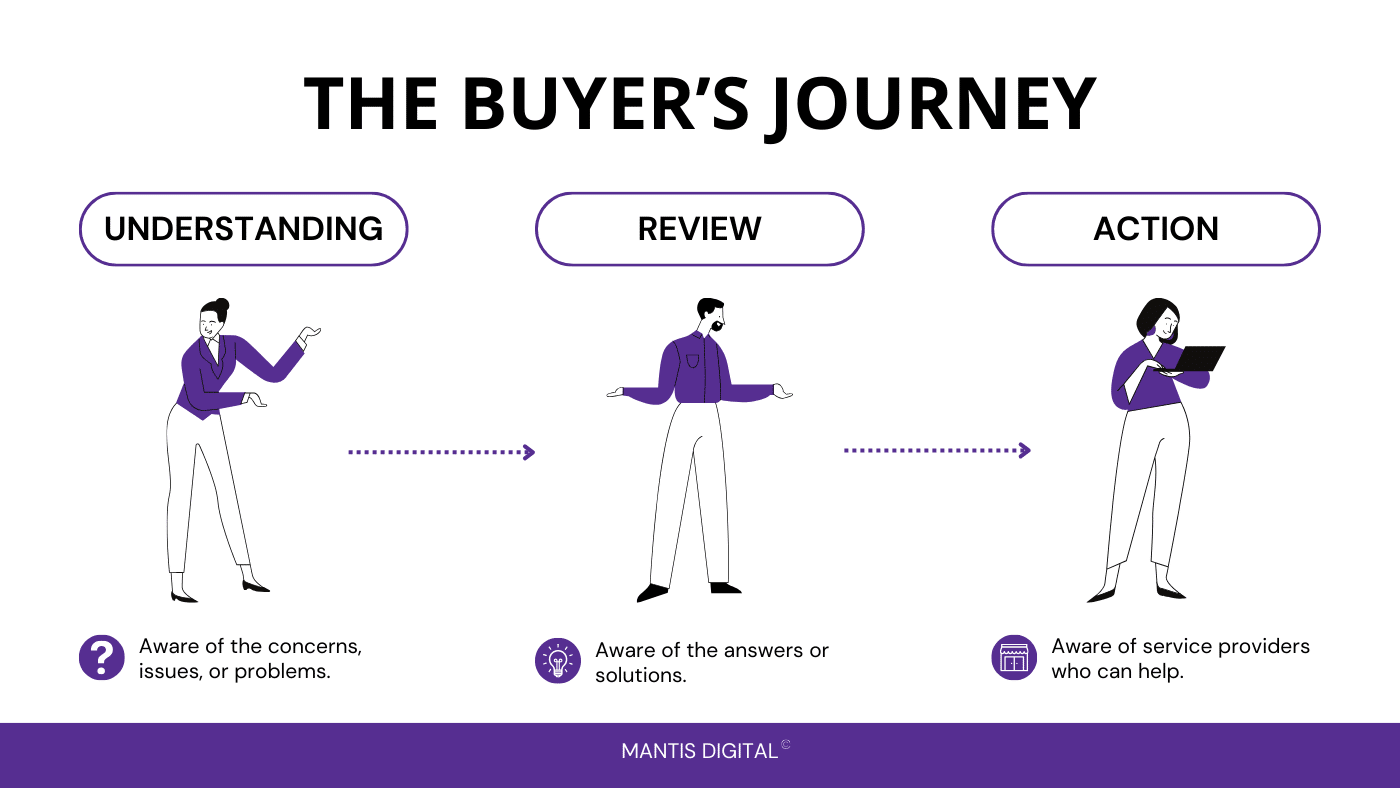
To make content that clicks with the right individuals, you must map out their buying journey. This means figuring out the steps they take before booking a service or making a purchase.
Buyer Journey Steps
Understanding and Awareness
This stage begins when your customer first identifies a problem or need. For example, an e-commerce entrepreneur may realise they need a better website to accommodate their growth, new product ranges, or functionalities.
Review and Consideration
At this point, your customer starts looking into different ways to solve their problem. They might research features and benefits and compare various options. A business owner may begin to Google ‘website designers in Auckland’ or read articles about ‘how to grow your e-commerce store’.
Action and Decision-Making
This is the pivotal moment in the buyer’s journey. It’s the last step where your customer is set to buy. They might seek reassurance or make their final choice. This may take shape or form through reviews and testimonials of previous web design clients.
How to Align Your Content to Each Step of a Buyer’s Journey
Top of the Funnel
Informational Content: Provide general information about your topic or industry. Examples include blog posts, articles, and webinars.
Keywords: Focus on broad keywords related to your industry.
Middle of the Funnel
Educational Content: Present more in-depth information and solutions to specific problems. Examples include case studies, whitepapers, and guides.
Keywords: Use more specific keywords that address your target audience’s needs and pain points.
Bottom of the Funnel
Persuasive Content: Focus on convincing your audience to act, such as purchasing or signing up for a trial. Examples include product demos, testimonials, and pricing information.
Keywords: Use keywords reflecting the desired action or conversion goal.
A Tailored Solution for Your Business
Let Mantis Digital show you the way from idea to reality and beyond. We’re skilled at planning, scoping, analysing, and strategising to build a strong base for your digital journey. We offer solutions that fit your needs, covering everything from website design and development to launch and beyond.
Share Article:



CONTACT US
Have An Idea? Let's Build And Scale It!